The Gay TV scene has definitely become more gay since the first gay character appeared on a TV sitcom in a 1971 episode of All in the Family (yes, All in the Family, if you can believe it). (AJ Aronstein, Splitsider) (Christine Sparta, USA Today)
We have come a long way since 1971. There have been hundreds if not thousands of LGBT characters (Wikipedia) (Alexander Stevenson, New Now Next) (Ethan Lacroix, TimeOut New York) (CBS News), story lines, and entire networks providing content of interest to LGBT audiences (Here TV, Logo, Q Television Network, Gay Cable Network).
We’ve seen individual gay characters that don’t necessarily stand out as representative of gay life and we can debate which ones have done more to harm the LGBT community than have done good. And there have been highly popular shows which have attempted to centralize its focus on gay life (Queer as Folk (Showtime), Noah’s Arc (Logo), Looking (HBO), Cucumber (Logo), Banana (Logo).
But how do we keep track of our presence and level of visibility on TV? One of, if not the first and only effort to measure the visibility of the LGBT community on TV was done by GLAAD, which in 1996 released its first ever “Where We Are on TV Report,” also called the GLAAD TV Scoreboard. That first report indicated there were 35 LGBT characters in the 1996-97 season. The 2015 report showed:
Regular LGBT characters
- scripted primetime broadcast network = 35 (up from 32 last year)
- scripted cable programs = 84 (up from 64 last year)
- scripted series on streaming content = 43
Recurring LGBT characters
- scripted primetime broadcast network = 35
- scripted cable programs = 58 (up from 41)
- scripted series on streaming content = 16
These numbers indicate to me that we have come a long way since that 1971 episode of All in the Family and that first Scoreboard, however, as the 2015 GLAAD report indicates, there is a gap in representing the greater diversity of the LGBT community as it relates to gender, race, and gender identity.
In terms of acceptance of LGBT individuals generally by non-LGBT Americans, it appears that non-LGBT Americans are generally more comfortable with and accepting of LGBT people. However, it’s disappointing to learn that many have become complacent and that more than a third of non-LGBT Americans are still uncomfortable learning their child may have had a lesson on LGBT history in their school. (GLAAD Report on Accelerating Acceptance)
What is more alarming to me is when actors (who are now in the big leagues), who have portrayed gay characters in the past, make off-putting, downright homophobic remarks (Noah Michelson, The Huffington Post). This leads me to believe there is definitely work to be done.
GLADD notes “For many Americans, it was television shows that gave them their first images of same-sex couples, and a chance to recognize the commonalities with their own lives.”
And according to Professor Carole Bell from Northeastern University, who was quoted in The Huffington Post (Lauren Dunca), “This is not so simple as the idea that exposure breeds acceptance. People make connections with characters in a way that mirrors real life relationships, a phenomenon called ‘parasocial contact.’
“The idea is that TV viewers and other people consuming fictional entertainment can feel emotionally attached to the characters that they’re watching. Under certain conditions, when they do that, it will have a positive effect on the way they see a minority group.”
Television is a medium we should be concerned with for two reasons 1) to ensure our community is represented properly, and b) we are consumers.
Our buying power is in the $800 to $850 billion dollar range, says Dr. Marci Armstrong, associate dean of graduate programs at SMU Cox School of Business (Mark Brinkerhoff, The Dallas Morning News)
As a marketable demographic, the number of non-Hispanic adults in the United States who identify as lesbian, gay, bisexual, or transgender (LGBT) has risen 30% since 2007. (Marketing Profs)
And for TV habits, some 34% of LGBT adults say that they “very often” use another device or consume media from another source while watching television, making them 14% more likely than heterosexuals to multitask. (Marketing Profs)
I had the chance to connect with four very well known entertainers and professionals who are deeply versed in the media environment. I get their take on the state of “Gay TV” and learn more about their very exciting new and ongoing endeavors.
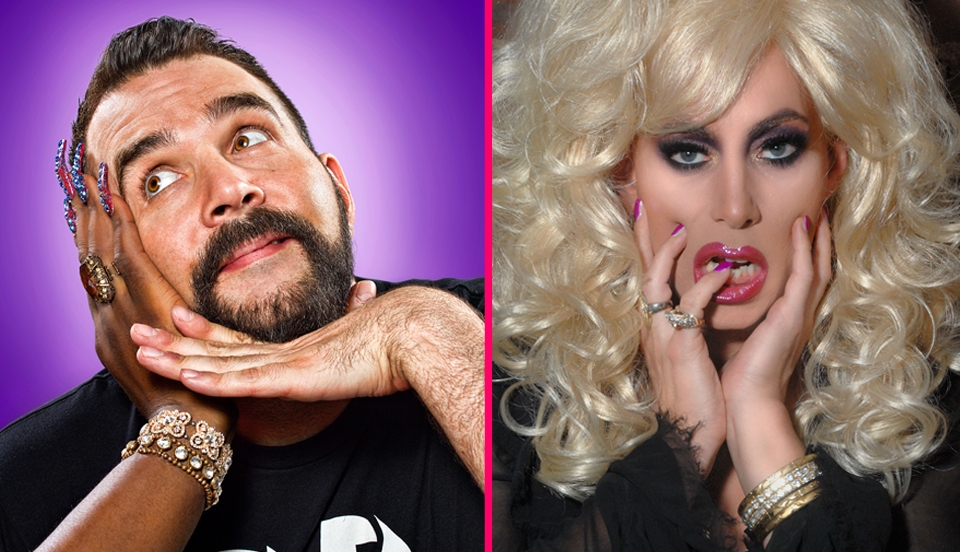
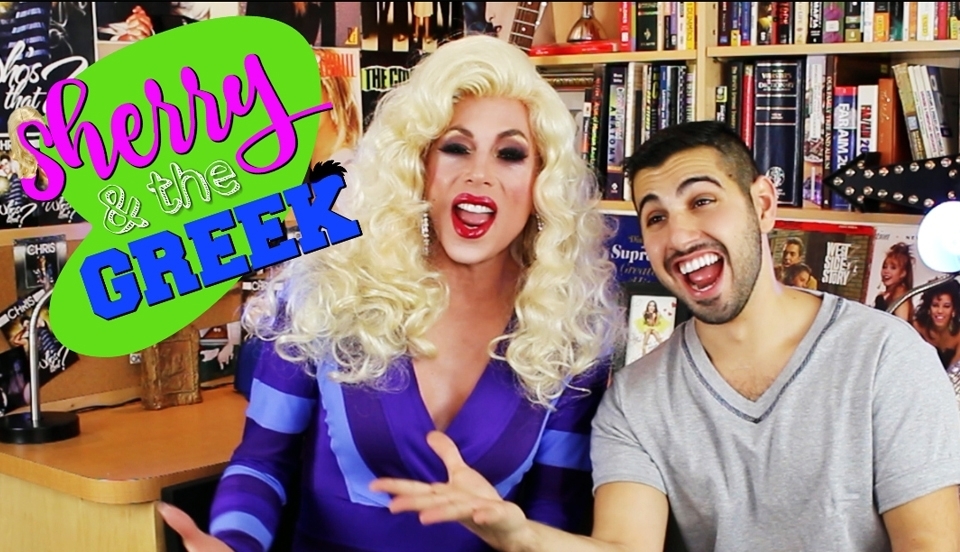
International drag darling Sherry Vine and former Here-TV executive Josh Rosenzweig are combining their style, humor and sensibility into a one-stop, digital destination for all of the world’s LGBTQ entertainment needs. gaySVTVworld premieres February 14 with original shows, specials, music videos, short films and more.
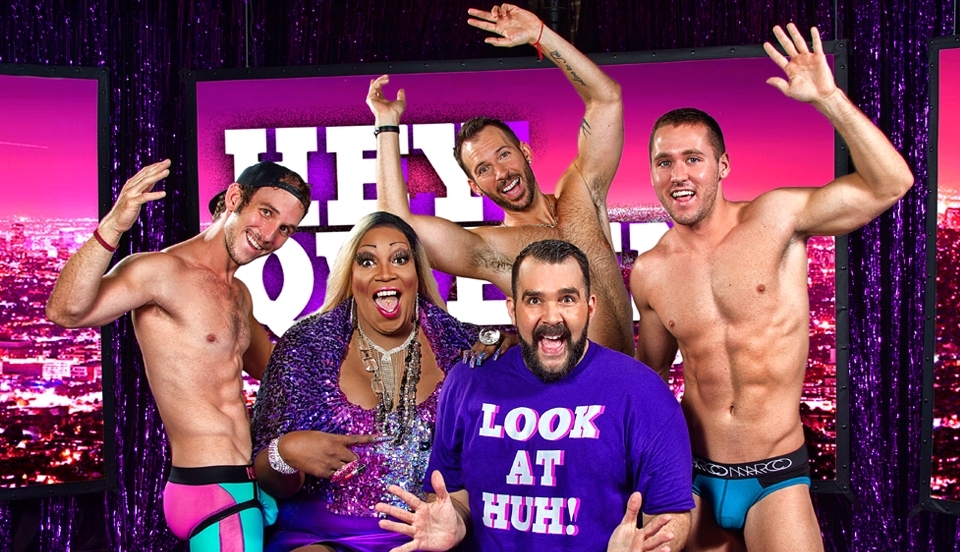
For three hilarious seasons, comedian Jonny McGovern and his co-host Lady Red Couture have welcomed many of the country’s top LGBT and drag talent − including RuPaul, Laganga Estranja, and Candis Cayne − to their couch. On February 15th, Hey Qween! launches its fourth raucous season on theStream.tv.
How have you seen the media environment for the LGBTQ community develop over the last 3 to 5 years?
Sherry/Josh: There is no doubt that our visibility in the mainstream media has increased enormously, which is a great thing… but it also means that by fitting into the mainstream we begin to lose our edge a bit.
Jonny: The visibility has exploded. Thanks to social media LGBT people and issues are finally getting some attention. Because sites like YouTube have allowed us to create content from our own stories you no longer need to wait to for Hollywood to make your vision happen. But in TV and in the movies there’s still a long way to go. A lot of opportunities have opened up thanks to YouTube and social media.
When it comes to marketing to a demographic, how niche is too niche?
Sherry/Josh: In this day and age the ‘niche-ier’ the better. With access via all the digital & social media platforms, the ability to find and reach a super-specific niche/demo is possible and wonderfully exciting.
Jonny: You want to be able to serve your audience but also appeal to a wider audience NOT by being “less gay” but by being gay as hell, authentic and funny. Cool people will go along for the ride if it’s quality.
How are you keeping your content fresh and relevant?
Josh: In a review of something we did once, we were described as a ‘pop-culture trash compactor’ and that is pretty apt, in our opinion. We have also been interested in what is happening in the world today, politically, in pop-culture trends etc. and then we mix it with our own sensibility and voila.
Sherry: We also always try to keep a toe in what’s current and relevant. I’m always searching for what’s the hottest song or trend and who are the new queens/performers that I want to work with.
Jonny: Our guests are always fresh and bring underground attitude and cutting edge looks to a mainstream format. Even though it’s a comedy show, we don’t shy away from “real talk.” And we keep evolving the look and feel of the show so it’s visually stimulating.
The way we access media has changed, how are you developing your content and programming to meet the changing demands of how we consume media?
Josh: Well in all honestly we could not have done it without YouTube! Access to the YouTube space has given us the ability to produce a wide variety of content. And by being in the YouTube space we learned (and continue to learn) a great deal about the viewing habits of digital audiences. Access to their analytics, guidance from their team and information we have each gleaned on our own working in media all help tremendously.
Sherry: And all of our content is short format. Attention spans continue to shrink, LOL. People can literally watch an episode while they’re riding on the train or eating lunch, etc.
Jonny: If you’re popular you have to feed the beast. We’re giving you content 7 days a week when we are in season. Main episodes come out Monday and then every other day you can see either a Hey Qween bonus from the main interview or one of the new spin off shows; our gossip panel show “HOT T,” “Judge Lady Red” where Lady Red decides cases of shade or no shade between young queens and our new advice show “Hey Qween Can I AXE You A Question?”
After our group questions, I had an opportunity to individually discuss their specific endeavors.
Sherry and Josh:
When did you two first meet and how did the idea for gaySVTworld come about?
Sherry: Wasn’t in the toilets at port authority??
Josh: Well we met a loooooong time ago and we have worked together ever since on dozens of plays, music videos, films and even a broadcast TV series (Here TV’s ‘She’s Living for This‘), so this was a natural extension of all that work. We share a common sensibility and approach to the work and about a year ago I approached Sherry to see if she would be interested in building out her YouTube channel. She was gung-ho, so we started attending workshops and seminars at YouTube to see how we could expand and it just grew from there.
Why is a network like gaySVTworld important and relevant today?
Sherry/Josh: It is still (and arguably increasingly so) important that LGBTQ artists and creators continue to have a space to call their own. A place to make videos and films and shows by and for LGBTQ people. No one is going to tell our stories like we will. Our goal is to establish a creative collective where queer artists from around the world can come and we can provide some resources to facilitate their work.
How is content developed for the network?
Josh: We divide programming into three buckets:
- Originals: Content that Sherry and I develop and produce ourselves. This can be shows, music videos, short film etc. Over the last 25 years we have created a long list of ‘dream projects’ so it’s more a matter of prioritizing and figuring out which projects we can do at any given time
Sherry: We always have ideas! LOL.
- Co-Productions: Programming that we develop with other creators. Our involvement ranges from providing resources and supporting from the sidelines to a full on producing role.
- Acquisitions/Licensing: We also reach out to (and are contacted by) people who have completed projects that have no distribution. In addition to resources, we really feel strongly about supporting queer artists and sharing our platform and access to audiences. There is so much content out there and it deserves to be seen!
The next set of questions were for Jonny.
We’ve loved seeing all the raucous merriment on the first three seasons of Hey Qween! and we’ve learned more about many terrific LGBT and drag talent, what’s in store for Season 4?
Jonny: We have a new bandleader Adam Joseph and The Go To Bed Wigs so we’ll be able to incorporate more musical elements and fun to the show. A new bigger set and of course incredible stars including Sharon Needles, Kennedy Davenport, Hecklina, Mrs Kasha Davis, Katya, Gia Gunn, Milan Christopher from Love & Hip Hop and many more.
Why is a show like Hey Qween! important today?
Jonny: There’s only one full blown full production value talk show where gay stars and nightlife legends can come to tell their stories and pass on wisdom to tha children and we are it! Our stories are important and I take pride in telling them.
How do you choose your guests for Hey Qween!?
Jonny: It’s a mix between our approaching people we enjoy and people approaching us. You have to have a story to tell and something to being to the table that our viewers will relate to or enjoy.
Which guest has been the most memorable to date and why?
Jonny: Of course it’s RuPaul. I’ve been a fan since the beginning and he’s been such an inspiration that for him to be so generous to us with his time and spirit was truly a delight!
What do you want people to take away from HeyQween!?
Jonny: We want them to laugh, forget their troubles and….GAG!
Any upcoming music videos we can look forward to?
Jonny: I’ll be releasing my new music video “Gay Questions” this spring… It’s gonna slay.