
By Corey Wesley
Photo: Courtesy of Darrell Goodwin and Kenny Goodwin-Brice
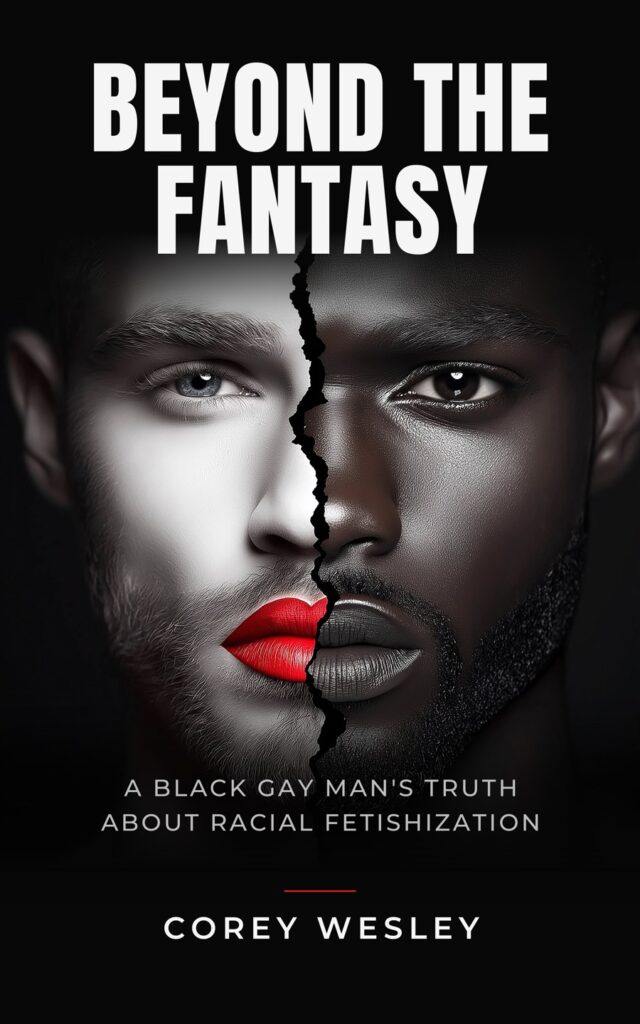
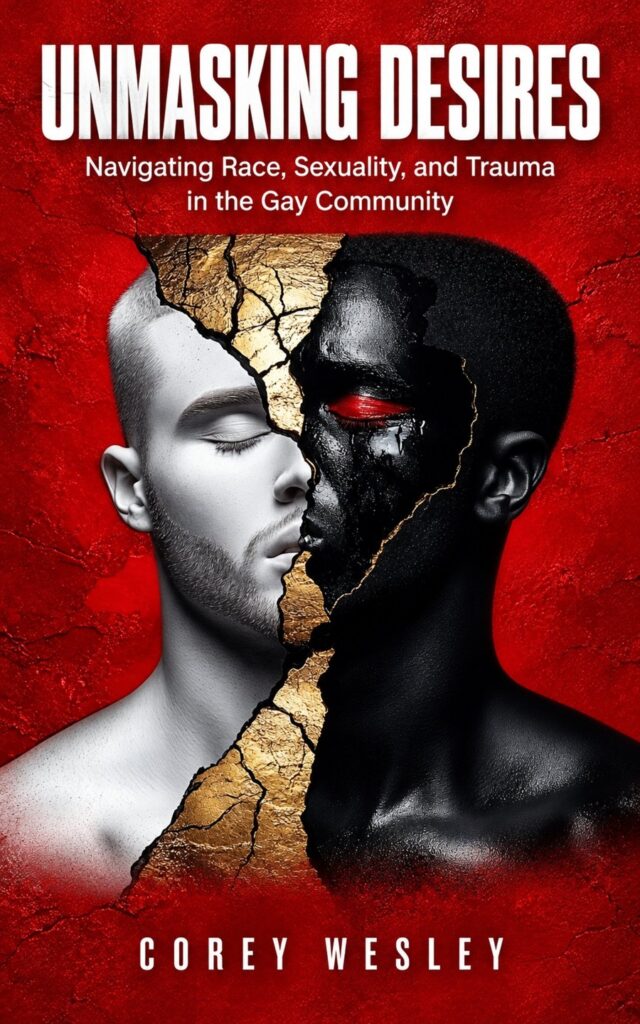
I’m a Black gay man in my fifties, and I know what it is to be left out. From corporate America to hookup sites, I’ve been faced with various forms of rejection. I’ve been left standing. I’ve written about it, and my books Beyond the Fantasy and Unmasking Desires come straight out of that.
Rev. Darrell Goodwin wrote to me after what happened to him and his husband Kenny at The Bushnell in Hartford on November 7. Every other anniversary couple was acknowledged. They were left standing. Queerty, PinkNews and B-Gay have already covered it.
I personally related and understood. That’s why I wanted to cover the story, but from a different angle. What is it like to live with these moments, and what can we do for each other as a community? Darrell and Kenny answered every question. Their words are below.
The Night
1. What do you most want people to understand about that moment?
We were not asking to be treated differently. We were asking to be treated the same.
We were two husbands celebrating four years of marriage. When couples celebrating anniversaries were invited to stand, we stood. We expected to participate in the same joyful moment as everyone else.
Instead, we watched other couples receive acknowledgment while we remained standing there.
People sometimes underestimate how painful these seemingly small moments can be. It wasn’t simply about being overlooked at a concert. It was about the familiar experience of realizing that your relationship is not being afforded the same recognition as others. It reminded me of the pre-marital couples therapist who suggested we should find a LGBT therapist because she didn’t have same-sex couple experience and I asked her why our relationship would be different and she couldn’t answer, or the wedding photographers who stated they had never photographed two men and recommended we find someone else. Each assumed they were being “harmless” but highlighted the struggle we would endure as a married couple seeking standard services.
2. When everyone else was acknowledged and you weren’t, what did you feel it meant?
I cannot tell you what was in the performer’s heart or what motivated his actions.
What I can tell you is what happened and how it affected us.
Our marriage was the one that went unrecognized. In that moment, it felt as though our love was less worthy of celebration. My stomach sank and it felt like a magnifying glass was on Kenny and I.
As a Black gay man, I carry the history of communities that have repeatedly been told their relationships, families, and humanity matter less. Moments like this can bring that history into the present in an instant. Briefly, I thought, “why did I risk, assuming we would be recognized, when a part of my heart knew it was just that a risk.”
3. What did the woman in the front row say, and what did it do for you?
A woman from the front row came over to us, embraced us, told us that she saw us and loved us, and wished us a happy anniversary.
I cannot overstate what that meant in that moment. We had just experienced the humiliation of standing in a room full of people while our marriage went unacknowledged. Then a complete stranger made the intentional decision to recognize our love.
She didn’t have to do that. She could have simply watched and gone on with her evening. Instead, she crossed the room to remind us that we mattered. She was tearful and you could tell it impacted her on a soul level.
What stays with me is that the audience did what the artist would not. People around us offered congratulations and affirmed our marriage.
That woman reminded me that even when someone makes you invisible, there are others who will refuse to let you disappear.
Her kindness didn’t erase what happened, but it helped restore some of the dignity and joy that had been taken from that moment.
4. Kenny, what was the night like for you? What do you want people to know that Darrell hasn’t said?
For me, the hardest part of that night was that we were simply trying to celebrate our love. Four years of marriage is something worth celebrating. Like any couple, we’ve had our joys, challenges, and moments of growth. We were there to enjoy an evening together, not to make a statement or become part of a controversy.
When we stood alongside the other couples and watched everyone else be acknowledged, it was hurtful. Not because we needed attention, but because we deserved the same recognition as everyone else in that room.
As a child welfare advocate, I spend my professional life thinking about the well-being, safety, and dignity of children and families. I know how deeply children are shaped by the messages they receive about who matters, who belongs, and whose family is considered worthy.
As First Gentleman of the Southern New England Conference of the United Church of Christ, I also have the privilege of standing alongside my husband in a community that strives to embody God’s expansive love. I see the importance of creating spaces where people don’t have to question whether they are welcome.
But that night, I wasn’t thinking about any of those titles. I was a husband standing beside the man I love, wondering why our marriage was the one that went unrecognized.
What I want people to understand is that this experience doesn’t end with Darrell and me. We are raising a daughter who will grow up watching how the world treats her fathers.
I want Kyrie to be proud of her dads. I want her to see two Black men who love each other, love her, serve their communities, and are building a family grounded in faith and compassion.
What I don’t want is for her to grow up afraid of the anger, judgment, or discrimination that might be directed toward us or, even more painfully, toward her because of who her parents are.
Children should never have to carry the burden of other people’s prejudice against their families.
I know we cannot protect Kyrie from every unkind word or every act of discrimination. But we can show her that when someone diminishes our dignity, we don’t have to accept it as normal. We can respond with courage, integrity, and love.
I’m proud of Darrell for speaking up, even knowing the criticism that might follow. His willingness to name what happened wasn’t simply about defending our marriage. It was also about helping create a world where no one has to fight the same battles.
More than anything, I want people to understand that we’re not asking anyone to approve of our family. We’re asking them to recognize our humanity.
Our daughter deserves to grow up knowing that her family is something to celebrate, never something to apologize for.
I don’t want Kyrie to inherit our fear. I want her to inherit our courage, our love, and the freedom to be proud of the family that raised her.
The Everyday Side
5. Moments like this are often small. A form that says “husband and wife,” a toast, a call-out. Where do you run into them in ordinary life?
Sometimes it is the assumption that one of us must be the other’s friend or relative rather than his husband. Sometimes it is the surprise people express when they discover we are married and raising a daughter.
Other times, it is the way institutions speak about families while seemingly imagining only heterosexual couples. This is from making a doctor’s appointment to booking a massage or vacation and the refrain is often “will your wife be joining you?” and I have to continually correct that assumption. Admittedly there are sometimes I don’t correct and deal with it when we both arrive.
What makes these experiences exhausting is their accumulation. One incident may appear insignificant to someone who has never experienced exclusion, but for those of us who have, it becomes another reminder that our belonging is sometimes conditional.
6. When it happens, how do you decide whether to say something?
That is a calculation marginalized people make far too often.
You ask yourself whether speaking up will be worth the emotional energy. Whether someone will believe you. Whether you’ll be accused of being too sensitive. Whether you’ll have to spend the next several days defending your right to be treated with dignity.
Sometimes you speak. Sometimes you decide you don’t have the capacity.
I don’t believe anyone should have to challenge every instance of exclusion to prove that it matters. This has been no different, some have accused us of seeking clout, others have said we knew better, even more distressing has been how dare we try to ruin a Black man’s career. In a way, those statements state that his livelihood is more important than our self-respect, and the impact on him greater than our hurt.
7. Darrell, you’re a minister and an elected official. Did either role change what you did that night, or how you handled it afterward?
Both roles have shaped my understanding of accountability, but neither is the reason I deserved to be acknowledged.
I was not standing there as an executive minister or town councilor. I was standing there as Kenny’s husband.
My public roles have taught me that institutions must be willing to examine the gap between their stated values and people’s lived experiences.
My faith also teaches me that every person bears the image of God. That includes people whose relationships and identities have historically been marginalized.
I believe grace and accountability belong together. We can extend compassion while still insisting on truth.
Speaking Out
8. Why did you decide to say something publicly?
Because silence is too often the price marginalized people are asked to pay for everyone else’s comfort.
I knew there would be people who would tell me to move on, minimize what happened, or question why I was making it public.
But I also knew that if I remained silent, the moment would simply become another experience we were expected to absorb privately.
I wanted people to understand that exclusion doesn’t always arrive through an explicit insult. Sometimes it happens when everyone else is welcomed into a moment of celebration and you are left standing outside it. Kenny and I also realize we are blessed to be surrounded by a great cloud of witnesses who affirm us in our public roles and so we had access to social capital that another gay couple might not have and in a way we spoke up for them.
We recognize that our public roles and supportive communities give us a platform that many other couples do not have, which is part of why speaking up mattered.
9. Some people say speaking out does more harm than the moment itself. How do you respond?
I think we need to ask whose comfort that argument is protecting.
Too often, marginalized people are told that naming harm is more damaging than the harm itself. We are accused of seeking attention, being overly sensitive, or threatening someone’s livelihood simply because we refuse to remain silent.
Those accusations can become mechanisms for preserving the very systems that exclude us.
I have never asked anyone to assign motives that cannot be established. I have asked for acknowledgment of what occurred.
If telling the truth about an experience creates discomfort, perhaps that discomfort is an invitation to examine what needs to change.
Why Here
10. You wrote to me directly. What made you want this story told here?
Because I believe Black queer people need spaces where our stories can be told with depth, cultural understanding, and dignity.
Mainstream coverage often focuses on the controversy. Who said what? Who apologized? Who was offended?
Those questions matter, but they don’t capture the fullness of our lives.
Kenny and I are husbands and fathers. We are building a family, raising our daughter, and contributing to our communities.
I wanted to engage OVAH MAG because I believe our story deserves to be understood within the larger experience of Black queer love, resilience, and visibility.
Our lives are about more than the discrimination we encounter.
Where It Stands Now
11. Both apologies came privately. Why does this one need to be public?
I want to clarify an important development: the performer has since issued a public apology, which I acknowledged.
I appreciated that step, but I also emphasized that we were not simply left feeling excluded. We were excluded.
The Bushnell’s leadership has communicated with me, and I appreciate their willingness to engage. We have discussed the importance of a public acknowledgment from the institution as well.
When an incident occurs in a public venue and becomes part of a broader public conversation, there is value in the institution addressing it publicly.
That isn’t about punishment. It is about demonstrating to the community that its commitment to inclusion is more than a statement on a website.
12. What would a public statement need to say for you?
It would need to acknowledge what happened without reducing it to our feelings or perceptions.
There is a meaningful difference between saying that someone felt excluded and acknowledging that they were excluded from a moment in which others participated.
I would also hope to hear a commitment to reflection and concrete steps that help prevent similar experiences.
I don’t need a perfect statement. I need an honest one. The performer’s public apology fails to meet this standard, especially given it is made as a comment on my Facebook post as opposed to any of his socials.
13. If the performer or The Bushnell read this, what would you want them to hear?
I would want them to know that I believe people and institutions are capable of learning and growing.
I am not interested in destroying someone’s career or reputation.
But I also want them to understand that our marriage is not an abstraction or a political debate. It is our family. It is our commitment to one another. It is the life we are building with our daughter.
When that love is overlooked, it hurts.
I hope they will receive this moment as an opportunity to think more deeply about whose love is being celebrated and whose may be going unseen.
What Changes
14. If a performer realizes in the moment they missed someone, what should they do?
Acknowledge it.
Something as simple as, “I missed a couple, and I want to make sure we celebrate them too,” could change the entire experience.
People don’t need perfection. They need a willingness to recognize and correct mistakes. Oddly, this is exactly what he did in relation to birthdays. In the show he ultimately acknowledged all birthdays and explained he couldn’t get to everyone. The same grace was not extended toward couples which has left me curious.
15. What would an inclusive anniversary moment look like on a stage?
It would begin with the understanding that love and marriage do not have one appearance.
A performer could invite all couples celebrating anniversaries to stand and acknowledge them collectively, or make sure every couple receives recognition without assumptions about gender or family structure.
Inclusion doesn’t have to be complicated. It simply requires intentionality.
16. What should venues change about how they run these moments?
Venues should work with performers and production teams to ensure that audience participation is genuinely inclusive.
That means thinking about the language used, the assumptions made, and how staff respond when something goes wrong.
I also believe institutions should have clear practices for addressing concerns raised by audience members, particularly when those concerns involve discrimination or exclusion.
A welcoming environment is created through consistent actions, not simply good intentions.
17. What should the people sitting around a couple like you do when it happens?
What the woman near us did: notice, care, and speak up.
She didn’t need a microphone, a title, or a public platform to make a difference. She simply saw two people who had been overlooked and chose to affirm their humanity.
Allyship is not always a grand public gesture. Sometimes it is simply refusing to pretend that something didn’t happen.
You can make room for someone, affirm their experience, or respectfully draw attention to an oversight.
What matters is that marginalized people should not always have to be the only ones defending their own dignity.
18. What does a good outcome look like for you and Kenny in six months?
A good outcome would be knowing that this experience led to meaningful reflection and some change in how people and institutions approach inclusion.
I hope the performer and The Bushnell emerge from this experience more attentive to the dignity of every audience member.
I also hope other Black queer couples feel empowered to speak about their experiences without shame.
Most importantly, I want us to return to the joy that brought Kenny and me to that concert in the first place.
We have a marriage to nurture, a daughter to raise, and a beautiful life to continue building.
I think often about my 90-year-old grandmother, who grew up under Jim Crow in Mississippi and now lives with us. She helped raise me when I was a teenager. Today, she gets to witness her grandson married to another Black man and raising a daughter together.
That is an extraordinary story of generational change.
I want Kyrie to inherit a world where her two fathers’ love is not merely tolerated but celebrated.
Ultimately, that is what this is about.
Our love deserves to be seen, but more importantly, our love deserves the freedom to simply be.
Editor’s note: OVAH MAG ran this story to bring light to what happened. The answers above are Darrell’s and Kenny’s own words, not ours.
Darrell’s book, A Place at the Table: 90 Devotions to Empower Every Heart, comes out from Dover Publications on March 16, 2027. Preorder it on Amazon.
As an Amazon Associate I earn from qualifying purchases.
If you’re OVAH!? You know what to do.
Subscribe to OVAH MAGNo AI-written articles on OVAH MAG. Every word here is the author’s own. How we work