

The defining moments in our lives come when we have to go through a transition. Losing a parent. Switching jobs. Reaching a certain age when you’re not ready to sit back and retire. What do you do?
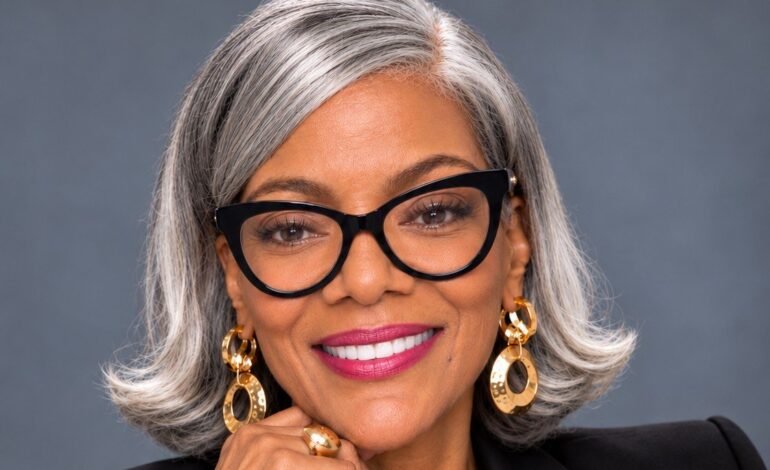
I’ll be transparent. Gwen DeVoe is one of my neighbors. If you say fabulous, she’s superior to that. She’s a leader and an innovator in the modeling, commercial and workshop industry. From the moment I met her, she had the style, the charisma and the beauty, and I was intrigued to learn more about her.
Gwen is a commercial actor, print model, entrepreneur and reinvention advocate, and she’s also thinking about the future. In the world we live in, ageism can be an issue, and it has put roadblocks in place. We’ve all heard the word. It gets thrown out there from time to time, and for some people it can be a hindrance. It isn’t holding Gwen back. It’s driving her to support others in the industry. At a time when people get written out, she’s not being written out. She’s giving people a platform, the knowledge and the skills to take charge.

When you look up “age is just a number,” Gwen is at the top of the page. She hasn’t let anything stop her, and you can see it in everything she does, from the commercials she’s been in to her print ads to her diverse background in business. She founded the Silver Fox Talent Collective, a community for women and men 50 and older who want to model, act, create content or reinvent themselves. She’s giving others the tools to go against all odds when it comes to ageism, and she’s created such a platform that I wanted to highlight it.
I had the opportunity to catch up with Gwen and sit down to ask her a few questions, to learn more about her new project and everything else she’s been up to.
How did you get started as a commercial actor and print model, and what was your first booking?
My journey into commercial acting and print modeling is proof that you don’t have to start young to build a successful career in this industry.
After years of working behind the scenes in fashion, producing Full Figured Fashion Week, mentoring models, and helping others navigate the business, I decided it was time to take some of my own advice.
At the age of 62, I signed with two talent agencies. One of them was Funny Face Today, now known as FFT Models, and it was through that representation that I booked my very first commercial acting job for Etsy.
That booking was particularly meaningful because, after spending so many years creating opportunities for others, I was beginning to experience the industry from an entirely different perspective, as the talent in front of the camera.
Since then, I’ve had the pleasure of working with brands across fashion, beauty, healthcare, and lifestyle.
What I’ve learned is that opportunity doesn’t disappear with age. Sometimes it simply takes a different form.
How is working as a mature commercial model different from high fashion? Where are mature models finding the most steady work right now?
Having spent years producing Full Figured Fashion Week and now working as a commercial actor and print model, I’ve had the opportunity to experience the fashion industry from two very different perspectives.
High fashion has traditionally emphasized a particular aesthetic, often placing significant importance on age, body measurements, and an editorial look. Commercial modeling, on the other hand, is generally more focused on relatability, authenticity, and connecting with everyday consumers.
And quite frankly, that’s where mature talent can really shine!
Let’s be clear about something. People over 50 aren’t sitting at home in rocking chairs waiting for life to pass them by! We’re traveling, shopping, investing, exploring new interests, and yes, spending money! So why shouldn’t we see ourselves reflected in the advertising for the products and services we’re purchasing?
For mature models, some of the more consistent opportunities can be found in healthcare, wellness, lifestyle advertising, financial services, retail, and beauty campaigns. These are industries where representing different ages and life experiences is particularly important.
Throughout my commercial career, I’ve had the opportunity to work with brands in several of these categories, and one thing I’ve learned is that casting isn’t always about finding the youngest, the thinnest, or the most glamorous person in the room.
Sometimes it’s about finding the person who can make a message believable.
That’s why I encourage aspiring mature models not to limit their definition of success to the runway or the pages of a fashion magazine.
There’s an entire world of commercial opportunities beyond traditional fashion modeling.
You don’t have to look younger to be marketable. You have to understand where and how you’re marketable.
For someone 50+ who’s just starting out, what’s the biggest misconception about getting an agent? When does it make sense to pitch yourself directly?
I think the biggest misconception is that once you sign with an agent, the bookings will automatically start rolling in.
Oh, if only it were that simple! (Laughs.)
Signing with an agency is an accomplishment, but it’s not a guarantee of employment. Representation is a business relationship, and like any successful relationship, both parties have responsibilities.
An agent can submit you for opportunities, advocate on your behalf, and help navigate the business side of your career. But you still have to show up prepared, professional, and ready to deliver.
When I signed with two agencies at 62, I understood that getting representation wasn’t the finish line. It was another step in building my career.
I also want aspiring talent to understand that you don’t necessarily need an agent to begin exploring opportunities.
Depending on the project, there may be opportunities to submit independently for commercial work, lifestyle campaigns, local advertising, or content creation assignments.
However, direct outreach should be approached professionally. Know your market, have appropriate photographs and materials, understand what the client is looking for, and be prepared to discuss compensation and usage rights. And if you’re already represented, make sure your outreach doesn’t conflict with your agency agreement.
I always encourage people to invest in their education before becoming consumed with finding representation. Learn how the industry works. Understand casting terminology. Practice auditioning and self-taping. Develop the skills that will make you competitive.
Because here’s something I tell aspiring talent: Getting an agent is one thing. Being ready when the agent calls is something entirely different!
An agent can help open a door, but you still have to be prepared to walk through it.
You had a billboard in Times Square. How did it feel the first time you saw yourself up there?
I was absolutely thrilled! But believe it or not, I was speechless at first, which doesn’t happen very often! (Laughs.)
I actually had to watch the billboard cycle through about two times before it really sank in that I was looking at myself on a billboard in Times Square!
As a native New Yorker, I’ve walked through Times Square countless times, never imagining that one day I’d be looking up at my own image.
It was an incredible moment of excitement, pride, and gratitude. And what made it even more special was realizing that I was experiencing this milestone at a stage in my life when society often expects women to become less visible.
That moment was another reminder that age doesn’t determine how big you can dream, or how brightly you can shine.
Brands are starting to use AI-generated models in their ads. How is AI affecting work for real models, especially mature models?
Artificial intelligence is changing the modeling and entertainment industries, and I think we’d be doing ourselves a disservice by pretending otherwise.
As a working commercial actor and print model, I recognize the concerns surrounding AI-generated talent. When brands can create digital images of people who don’t actually exist, it raises serious questions about job opportunities, compensation, representation, and the future of human talent.
For mature models, it’s particularly concerning because we’ve already spent years challenging age-related stereotypes and advocating for greater visibility in advertising and media.
But here’s where my perspective may be a little different.
Rather than simply fearing AI, I’ve made a conscious decision to understand it, embrace its possibilities, and educate myself about how it can be used responsibly.
In fact, I’ve helped organize and present educational workshops through our AI in the Spotlight series, introducing creative professionals and entrepreneurs to the practical applications of artificial intelligence.
I use AI in my own creative and business endeavors, so I’ve experienced firsthand how valuable it can be as a tool.
However, there’s a significant difference between using technology to enhance human creativity and using it to replace human talent.
AI can generate an image, but it cannot replicate the lived experiences, emotional depth, and authentic human connections that mature talent brings to a project.
I believe the future requires us to be both adaptable and informed. We need to understand the technology, protect our likeness and intellectual property, and continue advocating for ethical practices within the industry.
As someone who mentors mature talent, I’m also very mindful of how we discuss artificial intelligence. I never want fear of emerging technology to discourage someone from pursuing a dream or exploring a new career opportunity. Instead, I want to encourage curiosity, education, and adaptability. We may not be able to control how quickly technology evolves, but we can absolutely control our willingness to learn, grow, and remain engaged.
My philosophy is simple: I refuse to be intimidated by technology I can learn to understand. But I also refuse to believe that technology makes authentic human talent less valuable.
What should a model ask before signing a contract that lets a client use or digitally change their image?
First and foremost, understand exactly what you’re agreeing to!
As models and actors, our image, voice, and likeness are valuable professional assets. And with advances in artificial intelligence and digital technology, it’s more important than ever to understand how those assets may be used.
Before signing an agreement, I would want to know how my image will be used, where it will appear, and how long the client will have permission to use it.
Will my image be used for one specific campaign, or does the agreement allow for future use? Can the client digitally alter my appearance or create an AI-generated version of me? Can my likeness be shared with third parties? And perhaps most importantly, will I be compensated for additional uses?
These are questions every model should feel comfortable asking.
I also believe it’s important to understand the difference between standard photo retouching and giving a company permission to create entirely new content using your likeness. Those are two very different things.
And here’s something I especially want aspiring talent to remember: Never allow the excitement of booking a job to overshadow the importance of understanding your contract.
I know how thrilling it can be to receive that first booking, but protecting yourself professionally is part of building a sustainable career.
If you don’t understand the language in an agreement, ask questions. Seek clarification from your agent or a qualified professional. And don’t feel pressured to sign something simply because an opportunity has been offered.
I’m not suggesting that talent should be afraid of technology or hesitant to work with brands embracing innovation. Quite the opposite. I believe we should remain informed, adaptable, and open to new possibilities.
But enthusiasm and education should always go hand in hand.
My advice is simple: Know your value, understand your rights, and protect the image you’ve worked so hard to build.
Tell us about Silver Fox Model Camp. What are you launching, and who is it for?
Silver Fox Model Camp was born out of my desire to help mature individuals explore opportunities in the modeling industry. But over time, I began to recognize that the aspirations of the people I was connecting with extended far beyond modeling.
Some were interested in commercial acting. Others wanted to explore content creation, strengthen their personal brands, or pursue entrepreneurial interests. And some were simply looking for the confidence and encouragement to begin a new chapter in their lives.
That’s what inspired the evolution of Silver Fox Model Camp into Silver Fox Talent Collective, a career and creative development community for men and women ages 50 and older.
Our mission is built around four pillars: MODEL, ACT, CREATE, and REINVENT.
MODEL focuses on helping individuals understand the many opportunities within commercial, lifestyle, print, and runway modeling.
ACT introduces aspiring talent to commercial acting, audition preparation, self-taping, and the realities of working in front of the camera.
CREATE explores content creation, personal branding, digital storytelling, and emerging technologies, including artificial intelligence.
And REINVENT, which is especially close to my heart, encourages individuals to explore new interests, embrace transitions, and recognize that their age doesn’t limit their potential.
But here’s what I really want people to understand: Silver Fox Talent Collective is not just about helping someone become a model or an actor. It’s about building a community where mature individuals feel seen, supported, educated, and inspired to explore what’s possible.
After spending so many years creating platforms and opportunities for others, this feels like a natural evolution of my life’s work.
I’m not simply launching another program. I’m creating a space where experience is valued, ambition is encouraged, and reinvention is always an option.
Why focus on talent 50 and older? What did you see in the industry that made you build this?
Throughout my career, I’ve watched the fashion and entertainment industries place an enormous emphasis on youth, often overlooking the talent, experience, and purchasing power of mature consumers.
And I’ve always found that interesting because, quite frankly, we’re still here, we’re still spending money, and we still want to see ourselves represented!
But I also noticed something else. There are so many talented, creative, and ambitious mature individuals who have convinced themselves that certain opportunities are no longer available to them simply because of their age.
And that concerns me just as much as the industry’s reluctance to embrace older talent.
Sometimes the barriers are external, but sometimes they’re the limitations we’ve unconsciously placed on ourselves.
When I signed with my first modeling agencies at 62, I began to see firsthand that opportunities existed for mature talent. What wasn’t always readily available was the information, guidance, and encouragement to help people understand how to pursue them.
That’s one of the reasons I’m so passionate about Silver Fox Talent Collective.
While the original Silver Fox Model Camp was created to introduce mature individuals to modeling, the Collective expands that vision to serve men and women ages 50 and older who are interested in developing their creative potential.
I want to help bridge the gap between curiosity and opportunity by providing education, realistic industry insight, professional development, and a supportive community.
But I’m equally interested in changing the conversation people have with themselves about aging.
I don’t want people to spend the second half of their lives talking themselves out of possibilities simply because they believe they’ve missed their moment.
And perhaps most importantly, I want mature individuals to recognize that they don’t have to compete with their younger selves to remain relevant.
They have something equally valuable to offer: the person they’ve become.
That’s the community I’m building, and that’s the mindset I hope to encourage.
You started Full Figured Fashion Week in 2009. What did building that teach you that you’re bringing to this launch?
When I created Full Figured Fashion Week in 2009, I wasn’t interested in simply producing another fashion event. I wanted to create an experience, one that would make people feel seen, celebrated, and valued.
I’ve always believed that when people attend something I’ve produced, they should walk away feeling they’ve been part of something memorable and meaningful. That’s the standard I set for myself, and it’s a philosophy that has guided everything I’ve done since.
But building Full Figured Fashion Week taught me something equally important: when an industry doesn’t make room for you, sometimes you have to create that room yourself.
At the time, plus-size fashion was fighting for visibility, recognition, and respect. I saw an opportunity to create a platform that would not only celebrate the fashion but also bring together the designers, models, retailers, and consumers who were helping shape the industry.
Now, with Silver Fox Talent Collective, I find myself doing something similar, but with a very personal connection.
I’m once again building a platform for a community whose talent, experience, and creative potential deserve greater visibility. The difference is that this time, I’m also a member of the very community I’m advocating for.
And that brings an entirely different level of understanding and purpose to my work.
Whether someone attends one of our workshops, participates in a creative project, or simply connects with others in the Collective, I want them to leave feeling that they’ve gained something valuable.
Because ultimately, I don’t just want people to remember what we did. I want them to remember how we made them feel.
You call yourself a reinvention advocate. What has to change in someone’s head before they see their age as an advantage?
I think the first thing that has to change is the belief that your best years are behind you.
We’re conditioned to think that life follows a particular timeline. There’s an age when you’re supposed to build your career, an age when you’re supposed to have everything figured out, and eventually an age when you’re expected to slow down and quietly step aside.
But who made those rules?
After nearly 25 years in corporate America, I found myself facing an unexpected career transition. Around that same time, I was dealing with serious family challenges and the loss of someone very close to me. It was a period that forced me to take a hard look at my life and ask myself, “What’s next?”
And that’s the question I encourage other mature adults to ask themselves, not with fear, but with curiosity.
I’ve learned that reinvention doesn’t mean discarding everything you’ve accomplished or starting over from nothing. It means recognizing that your experiences, your skills, your wisdom, and even your setbacks have prepared you for something else.
At 68, I don’t see my age as a disadvantage. I see it as an asset. I’ve earned every gray hair, every lesson, and every bit of confidence I carry today.
I’m not interested in being 28 again. I’m interested in discovering what else is possible at 68 and beyond!
That’s why I call myself a Reinvention Advocate. I want men and women to understand that they don’t have to abandon their dreams simply because they’ve reached a certain age.
You are not too old. You are not too late. And you certainly don’t need anyone’s permission to begin again.
Photo credit: Dorothy Shi
No AI-written articles on OVAH MAG. Every word here is the author’s own. How we work