Editor’s Note: Jeffrey identifies as genderqueer and uses they/them as their singular pronoun. We have used “they” to refer to Jeffrey throughout. For those not familiar with current conversations and use of pronouns check out 2015 Word of the Year is Singular They, Nonbinary.org or do a quick Google Search.
We all experience the highs and lows of life and sometimes we struggle with our personal battles alone.
For decades thousands of members of the LGBTQ community have faced adversity alone without guidance or support. In the last decade that has really changed and progress is being made by providing our youth with endless resources to help them be the best they can be. Influential and progressive leaders have emerged who have a voice and are interested in engaging with others and providing our youth with positive images and examples… Images and examples of hope!
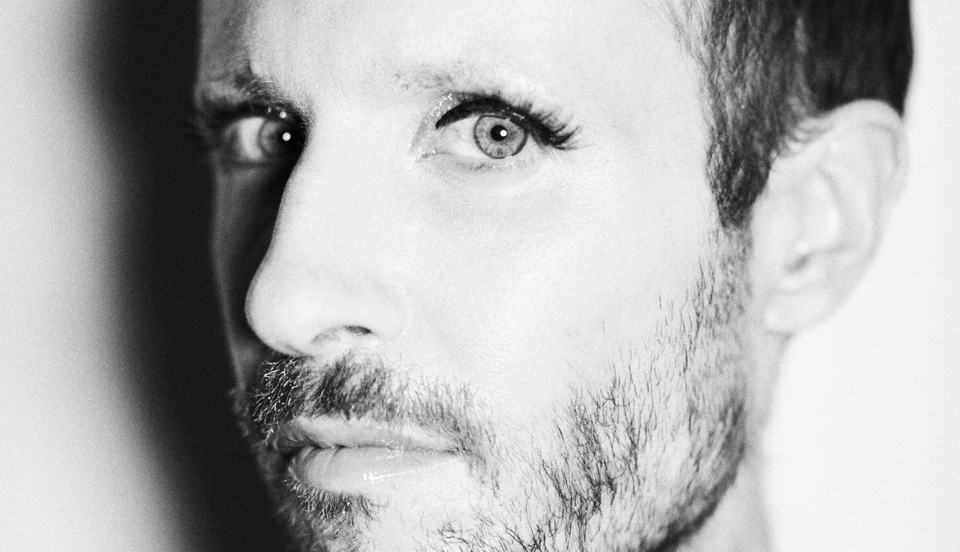
Jeffrey Marsh is one of those leaders. Corey Wesley, creator, co-owner, and Sr. Creative Director of Kinkster Mag has been following Jeffery for a while. During some of Corey’s low moments he would venture to Jeffrey’s Twitter page to find inspiration and positive affirmations to get him through the day. Wesley was so impressed by Jeffrey and the connection they had with their audience, Wesley felt Jeffrey was the right person to be Kinkster Mag’s very first feature in 2016.
For those of you who don’t know Jeffrey, I think you will be very interested in learning more about them and what they have to share. For those of you who already know Jeffrey, I think you’ll learn even more about them with some questions you have not read before.
Jeffrey is an LGBT advocate who has garnered over a quarter BILLION views across social media. Jeffrey is the creator of the global trends #DontSayThatsSoGay and #NoTimeToHateMyself. Jeffrey has earned spots on Top Viner lists by both Buzzfeed and Vine with a positive, inclusive message.
I appreciate your taking the time to allow me to learn more about you and your endeavors to imbue the world with more positivity.
I know that’s not a question, but I MUST respond. It is so weird to people that I spread positivity — at least that’s what they tell me on social media. My assessment is that the world is full of bitter people who feel that they have a good reason for being bitter. I have been through a lot of very difficult things, and people expect bitterness because of that. Perhaps I’m simply lucky, I think it’s important to point out right off the bat that having a difficult life, being laughed at and abused and belittled and dismissed can point us in two different directions: We can go to some very dark self-centered “woe is me” emotional-black-hole places and try to drag everyone else down with us. OR, we can use those experiences as a gateway to compassion. It is powerful when we make the transition to ending violence exactly because we have experienced violence ourselves.
How do you maintain a level head given your star status? Over a quarter billion views across social media…come on, that’s crazy!
I love this question because it never really occurred to me to consider it. You would think that a quarter billion views would change a person, but I’m still the same me. I don’t mean to diminish the work I’ve done. I am darn proud of effecting so many lives, but I found out early on that if I start to think about “how many likes” it will drive me crazy.
I decided a long time ago to be exceedingly uninformed about how popular any particular post on Instagram is. What I’m trying to do is connect with people, not increase numbers. Maybe that’s the secret to a level head? Keep your priorities straight. Concentrate on how you can help. Look for ways to serve others. My whole life I’ve been really bad at popularity contests, and the second that I start to think about social media as connected to my worth as a human being, I know I have to change my approach. So, my whole interaction with all my social accounts I have the apps set up so that I can avoid haters, connect with people who need me, and not know a thing about the numbers.
Is there a typical day for Jeffrey Marsh and if so, what does that look like?
I’m up early! Which doesn’t make me a better person, by the way. It just happens to be my rhythm to be in bed early and up early. The very first thing I do is walk. I’m not a fan of jogging really, but I always feel like you must get the blood moving when you wake up. I found through experimentation that if I didn’t move things around, a lot of excess energy would go up into my head and explode in a bunch of unpleasant “oh my god, I have so much to do today” kind of buzzing thoughts. When I don’t walk, it leads to unpleasant thoughts. So I walk. For an hour. Every day. After that is meditation. The rest of the day really is variable, just meeting with editors, making vines and doing business stuff. I’m very lucky.
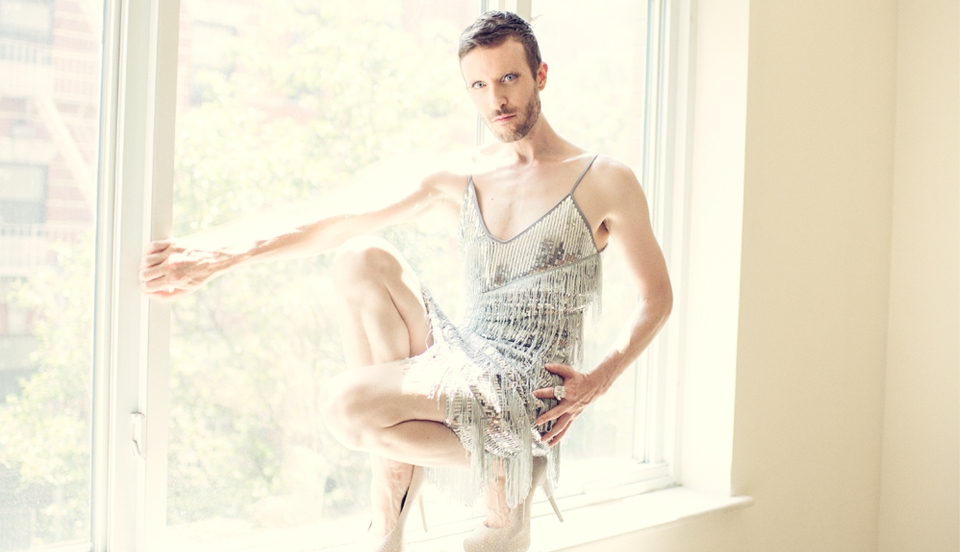
It’s absolutely heart-wrenching to learn about some of the emails you receive from young people. I’ve learned that spreading your message of acceptance, inclusiveness and positivity is one of the driving forces for you to continue. But what one thing allows you to be refreshed each day to maintain your positive outlook?
Well. The first thing to note is that I don’t always maintain a positive outlook. Not to be too irreverent here, but I think that if someone truly always has a positive outlook, they might be a sociopath. Reality and emotional energy is up and down and sideways. Energy changes constantly. One thing I have learned to do that keeps me going is accept whatever is happening for me. That’s a real key. Whatever the energy is, let it be what it is. My Buddhist spiritual practice has of course helped with this.
I guess you could say that I’ve taught myself to maintain an accepting outlook, if not always positive. I remember when I was twenty-four or five having a ceremony to marry myself. I’m still committed! I’m still committed never to leave myself no matter how I feel or what I say or who I piss off or how many followers I have. And that keeps me going day after day. There is also something to be said for being of help in the universe. I want to get up and make another vine if it will help one kid in Alabama feel less alone. I am fortunate that people email me and tell me I’m having an impact — I’m fortunate that I have feedback on how it’s going.
You have done extensive and important work with a lot of youth. What are some of the things you’ve learned from them?
I’m glad you asked me this, because time and time again they assume it’s a one-way street: I impart wisdom, they consume. But it’s not that at all! I can’t believe I’m going to use this phrase but “kids these days” are light years ahead of the rest of us when it comes to accepting other people. I knew how to do that already of course, but I am inspired and astonished every day at the cavalier attitude young people take toward identity. On one hand they have a million labels: demi-sexual, pan-romantic. They really care how they are defined. And on the other hand, they seem to have no problem what label someone else chooses. They like labels. They don’t police who “gets to” use them. It’s amazing.
As soon as my star began to rise on vine, youth started asking “What pronouns do you use?” and I had rarely been asked that before. They saw something in me that I had always seen in myself, but could barely articulate. They assumed that I deserved the respect of other people using appropriate language. The youth reflect a chance at acceptance and love for everyone that gives me great hope for the future.
How, if at all, have you connected with parents and family members of those youth?
Oh, it happens all the time. Sometimes a parent will Vine me or email. I had someone write not too long ago about how her teen daughter and mother and she — three generations — went shopping in their small town and the check-out person in one shop was gender non-conforming. Grandma dragged her granddaughter from the store spewing some pretty hateful stuff about how the salesperson was screwed up and probably psychologically ill. This mom wanted to know how she could talk to her daughter and combat some of the hate that grandma was trying to teach. I told her to offer her own perspective, show her teen daughter some examples (like me!) of people who don’t follow the gender rules and then…let her daughter come to her own conclusions.
One thing parents do naturally is hold onto the image of their kids as “too young” for subjects they are actually already talking about. Sometimes though, parents notice that their kids are sharing my videos online and they notice my inclusive and positive message and (I’m so proud of this) those parents ask me what’s up. We will never get anywhere if we don’t communicate, and I’m happy to serve as a bridge (or maybe just a conversation-starter) for parents and teens.
Part of the reason I ask about parents is that a dear friend recently asked me about my thoughts on her children’s gender expression. She’s finding that each of them expresses their gender differently than what was assigned at birth. The oldest is about 9 years old and the younger child is about 7. She is very supportive of her children expressing themselves in their own way, however, she is somewhat concerned about how she can protect them from others who may not be as supportive as they get older.
What advice or thoughts would you offer to such a parent who is interested in supporting their children as they develop into who they are and who they were meant to be?
I am not a parent, but I hear it’s like wearing your heart outside your body. This is a really tough situation, and it’s heart-breaking, because this parent can’t protect their child from the world. The kids will be hated. But here’s the thing: we can’t protect ourselves from the world either. And the things you would need to do to protect yourself or your kid from the bad parts of life will cut them off from the good parts of life too. What I would say to this parent is very simple: as soon as you sense your kids can handle a discussion about how the world is in regard to these subjects, talk to your kids. Be frank. You do not protect them or serve them by withholding information.
This comes up in interviews all the time: “When did you discover that you were different?” I’m starting to get slightly annoyed by that question because it implies that straight-ness is same-ness or normalness and whatever I am is “different”. I challenge that notion. But, long story longer! I never discovered I was “different”; I was always me. That part just was. What I discovered growing up was that everyone seemed to have a really big problem with how I naturally am. Everyone seemed to be scared or annoyed or upset because of my self-expression. I eventually assumed that that was because there was something fundamentally wrong with me. That’s what I want all parents to head off at the pass. Talk to your kids, tell them: Some people will hate you just from looking at you. Some people will call you names. Some people will try to change you. I will never do those thing because I love you. I love you exactly how you are and I will support you in becoming whatever you want to become.
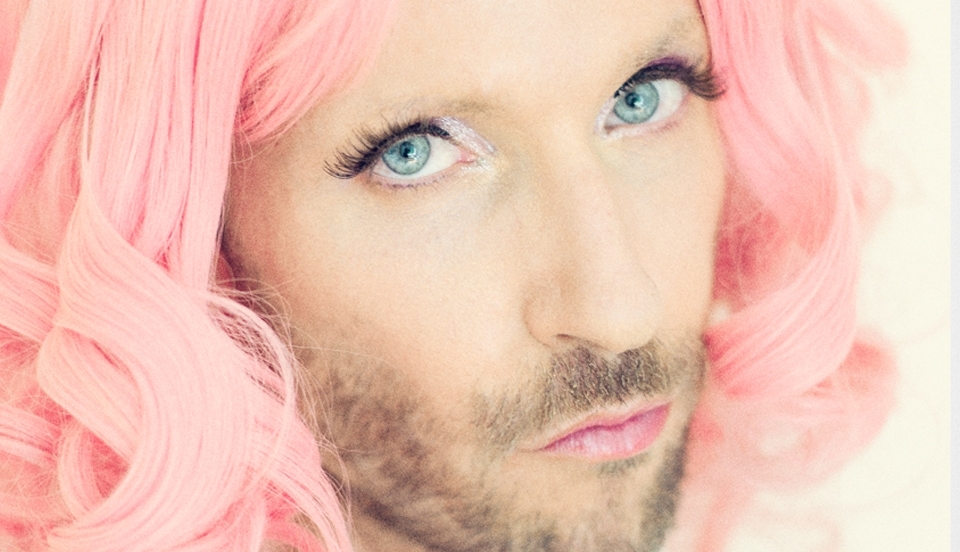
I’m a 46 year old, gay white male who doesn’t recall a lot of conversation about gender identity when I was “coming of age.” I have to admit, I’m learning. What do you make of the evolution of society’s conversation about gender, gender roles, gender expression, gender identity over the past 3, 5, 10 years?
I am so glad you said this! I constantly say that I am really hard to offend. And it’s true. I have made it part of my personal spiritual practice not to get upset when someone makes assumptions or uses the “wrong” word for me or whatever. This is for two reasons: words and people aren’t “wrong”, AND I want to keep the communication going. I think sometimes, in the name of being PC, we have shamed others into keeping their mouth shut about their lack of understanding. We all need to say what’s going on for us if we are going to understand each other. I talk about this in my book. When I was 11, I told my mom “I think I like boys.” I didn’t even have the knowledge of the word gay! I eventually said I was gay in high school, then things got more (or maybe less?) complicated as I refined what self-descriptors seemed appropriate for me. Now, I’m going with genderqueer, but that may change at some point in the future! Stay tuned!
I take a very laid back approach to the whole thing. I know fundamentally for me that gender is illusory. I feel man one moment. I feel woman the next. Something else the next. There have always been folks with this same experience. To answer your question about “society’s conversation” on gender, I just think people at large are catching up to the slip-slidey way that some of us express and experience ourselves.
What, if any, generational differences have you seen?
A lot. Absolutely. 100%. As I hinted at before, young people are not only fully okay with this world of gender fluidity, they have moved beyond it. My appearance doesn’t even seem to phase them. They like it actually! If someone assumes that I’m “just a really gay man”, they are entitled to that opinion, and they are probably older than 40!
Labeling issues aside, some have argued that individuals within the LGBTQ community may or may not be connected and share common experiences across the L-G-B-T-Q continuum and, therefore, shouldn’t necessarily be lumped together under LGBTQ. Do you have any thoughts you could share?
I sure do. I think, like many issues we face, it’s more about class than gender expression. A white gay man may not feel connected to a transgender woman of color. I suspect that has more to do with their class and race than that one is “G” and the other is “T”. When I think about my tribe it is all-inclusive, as you might have guessed! Everyone that feels like an outsider, who was picked last for kickball and who had nowhere to sit at lunch, that’s my community. I’m not down on popular people of course, but so many people feel left out, so many people feel rejected and shamed. That’s who I’m on earth to connect with. We’ll come up with an acronym for our group someday!
It may be fun to note here that I’m not very concerned with getting labels “right”. Labels are absolutely fine and they empower a lot of people, but I often feel labeless. And a label can never replace the homework of learning to love and accept you. That must come first, no matter what you end up calling yourself. This is what we all have in common and the mandate from life that we must learn to accept who we are is what unites not just the LGBTQers, but all humanity.
Where do you see the conversation about gender identity and gender expression headed and where do you see yourself positioned in the next 3-5 years?
On The View! I’m kidding. People will sometimes ask me if I want a world without gender. I tell them, heavens no! I use gender for expression as much as anyone else. Where I see us headed is toward a loosening of the current standards on who can use what aspects of gender to express themselves. The road will not be easy, and perhaps this is a bit can-of-wormy, but we have (supposedly) two genders so that one can be better than “the other”. If we move toward having 3 or 15 or 75,000 genders, people in positions of power will find it quite difficult to know who’s better than whom. Which genders do you pay less for the same work?? for example.
Let’s discuss your upcoming book release. You are working with Penguin Random House and we will soon be able to buy How to Be You. What can you tell us about it?
I can tell you all the secrets! The book is meant to be the manual you never got in school about how to love yourself. My editor and I took all of the most popular questions that teens were asking me online — the things they care about the most — an consolidated the answers into nine chapters. The book is a hodgepodge (like me!) of different styles. It’s part memoir. How did I fare growing up genderqueer in rural Pennsylvania? It’s part practical advice. What can you do to directly improve your life? And my fave, it’s part workbook. You answer questions. You tear out pages. You draw and paint. You create the book with me and, in the process, you discover how to be you.
You’ve done some writing online (Huffington Post and Medium), but what was it like to put together a book?
Quite different. I love responding to your questions because I’m not being edited! Penguin Random House never changed the spirit or meaning of what I say, but there is a certain freedom in being able to form ideas off the cuff. I must say that the book is a labor of love. I honestly want it to go into as many possible hands as it can and I realized early on that if I could work magic I would want it to go into my hands. I want to build a time machine and hand the book to eleven-year-old Jeffrey. The whole thing is a letter to little me. And it is designed to be a love letter from whoever reads it to themselves.
And finally, in sticking with our brand, here is more a fun question, what is something you have done that others might consider tight-lipped or kinky?
I love your brand! People never ask me about sex and kinks, although they can cause a great deal of shame and suffering in everyone’s lives. Accepting your sexual self is a huge part of accepting who you are. I suspect people avoid asking me about it because of a general taboo, but also because I work with young people and adults on the whole would rather not face the fact that young people think about sex, and many of them have it.