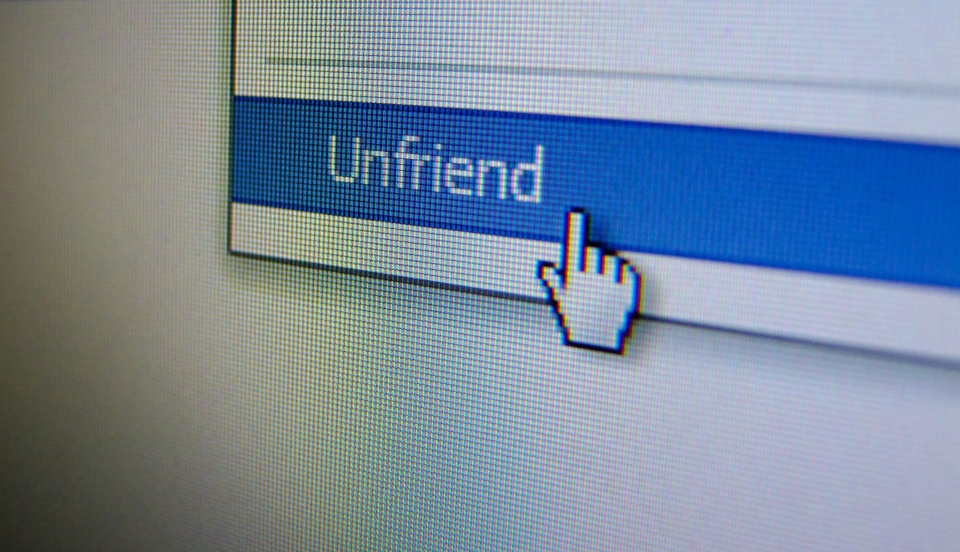
Recently I had a conversation with a close friend of mine who is considering un-friending a mutual associate of ours because he finds this associate’s Facebook posts judgmental, offensive, disturbing and they lack sensitivity towards gay men.
This person in question is someone who he has respected and admired for years because of their acceptance of gay men but lately he is beginning to question the person’s true alliance to the gay community.
As an ally of the gay community I believe the intent of this associate’s comments is not malicious. Being funny on social media is difficult and often times never translates properly especially when trying to use the community’s own terms and phrases as humor. Personally I leave the jokes to the comedians.
I live by the motto, “You’re responsible for the energy you bring into this space” but when that space is invaded it’s pointless to debate or educate someone via social media. Plus, the person has to be willing, able, and ready to receive the information and most often the person isn’t capable or willing to hear your argument, especially when it comes to Facebook. It’s their space (wall) to post whatever they want, whether it’s politically correct or not.
If you don’t like what someone is posting on Facebook instead of debating I say un-friend them, unless it’s someone you’re close with. Differences of opinion are easily accepted when it’s between two parties who respect one another’s opinion and are mature enough to have a positive dialogue. If not, the best thing to do is un-friend that person.
Un-friending a person sounds childish but it’s not. When you turn on the television and there is something you don’t like, what do you do…you change the channel. From personal experience it’s better to walk away from pointless debates rather than spend your precious time trying to challenge another person’s thought process, humor or opinions.
Oddly, Facebook was created to bring people together but oftentimes it does the opposite and pulls people apart. You might think you know someone but the freedom to express oneself can give you a close-up into that person’s character.
Facebook allows people to execute uninhibited thoughts quickly and with little or no consequences. Uninhibited thoughts require little thought because they’re closely related to a person’s true thoughts and opinions.
For example, my friend is unhappy with a person he’s known for several years and who happens to be heterosexual but very immersed in the gay culture. This was a connection where he felt accepted. However, lately he’s realizing their posts are judgmental and are evidence that they might “not” be a die-hard ally of the gay community as he had perceived.
The person has been using terms and phrases that perpetuate stereotypical images and judgments of gay men. Butch, Queen, Twink are terms we freely use as gay men to describe one another. Although it’s not right, it’s part of our culture but also feeds into the discrimination of our unique individualities as gay men. However, when someone outside either our culture begins using these words, I begin to realize the nature of the beast, it’s a form of judgment.
The world is a judgmental place especially when we use words to describe individuals that are ultimately degrading and belittling. When I was young I hated words like faggot, queen, dick-lover; hurtful words that created shame; a shame to be me.
Gay-shaming is a common practice in our community but we rarely find it troubling because it’s usually coming from another gay person. It reminds me of the saying, “it takes one to know one” but is that honestly true?
This dilemma my friend faces with this person may be viewed as trivial or pointless but it’s not. The person in question is an ally to the gay community and should understand the power of these words.
When you call someone who has a beard a ‘butch-queen’ what message are you sending to our youth or when you say, “butch in the streets and queen in the sheets” can that be considered gay-shaming or bullying?
Although being funny may be the intent, I hope we as a society understand that our preconceived notions of what a gay men is does more harm than good.
My dearly departed grandmother once told me “you’re a man first with different desires,” a definition of gay she believed in and instilled in me. It allowed me to be proud to be gay, love myself, and gave me the strength to ignore the labels people “try” to place upon me. I can’t change the views and opinions of others but I understand I’m responsible for the energy I bring into a space.
I am proud to be gay because my grand-mother and mother accepted me for who I was and encouraged me to be an individual regardless of public opinion or judgments. Being an individual isn’t easy but it’s much harder when you have to deal with the stereotypes created by society and continue to live with perceived allies who don’t understand the ramification of their language and “jokes.”
Whether you want to be a gay man with a beard who wears lipstick, carry a purse, or wear heels with a bald head, just do you.
Being a man is “NOT” determined by the clothes you wear, who you sleep with, or whether you’re masculine or feminine. A man in my opinion is someone who is honest, has integrity, loves his mother (subjective) and the courage to be who he wants to be regardless of what anyone has to say, good or bad.
Always remember the words you use to describe someone else might be used to describe you and you might not appreciate the words they choose.